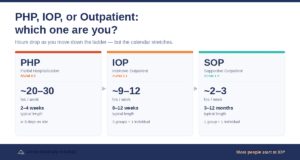
PHP, IOP, or Outpatient: Which One Are You?
The six questions clinicians actually use to decide between PHP, IOP, and outpatient rehab — translated out of clinical language so you can walk through it yourself.

The six questions clinicians actually use to decide between PHP, IOP, and outpatient rehab — translated out of clinical language so you can walk through it yourself.

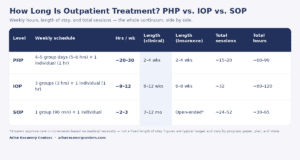
If you’re looking into outpatient treatment, you’re probably wondering how it will fit into your life — and fitting around your life is the whole point. Unlike inpatient or residential rehab, outpatient care doesn’t ask you to put everything on hold. You keep living at home, working, and showing up for the people who count on you, all while getting real, structured treatment. Below we walk through the three levels — PHP, IOP, and Supportive Outpatient — in plain numbers: hours per week, what a typical week looks like, how long each runs, and what insurance usually covers. Written by

What is a partial hospitalization program (PHP)? How it works, hours per week, how it compares to IOP and inpatient care, costs, and who it is right for.
A plain-English guide to outpatient rehab in Texas — levels of care (PHP, IOP, SOP), costs, insurance, virtual options, and how to choose a program.

When facing the challenges of drug addiction, choosing the right addiction treatment program is crucial. Outpatient drug rehab has emerged as a popular and effective option for many individuals seeking recovery while maintaining their daily responsibilities. But does outpatient drug rehab really work? In this blog post, we will delve into the effectiveness of outpatient rehab, explore its benefits, and highlight why it may be the right choice for those on the path to sobriety. What is Outpatient Drug Rehab? Outpatient drug rehab is a form of addiction treatment that allows individuals to receive therapy and support without residing in

Understanding Outpatient Drug Rehab: A Comprehensive Guide Drug addiction is a complex and challenging issue that affects millions of individuals and families around the world. Fortunately, there are various treatment options available to help individuals overcome substance abuse and reclaim their lives. One such option is outpatient rehab, which offers flexibility and support for those seeking recovery while maintaining their daily responsibilities. In this blog post, we’ll delve into the specifics of how drug outpatient rehab works and explore its benefits for those on the path to recovery. What is Outpatient Drug Rehab? Outpatient drug rehab is a type of
Fentanyl: The Synthetic Opioid Fueling America’s Opioid Crisis The United States is currently experiencing a pandemic of fentanyl overdoses. Fentanyl is a synthetic opioid that is 50-100 times more potent than morphine, and even a small amount can be lethal. The widespread availability of fentanyl has resulted in a sharp increase in overdose deaths, making it a national public health crisis. However, there is hope. Intensive outpatient treatment (IOP) provided by Arise Recovery Centers in the Dallas, Fort Worth, and Houston communities can provide individuals with the necessary tools to overcome addiction and help avoid accidental fentanyl overdose Fentanyl overdoses
Since its inception in 1989, Recovery Month has stood as an annual beacon of hope and inspiration, shining a light on the path to recovery for individuals grappling with substance use disorders.
Intensive Outpatient Treatment: A Great Option for Substance Use Treatment Intensive outpatient treatment is a great option for individuals struggling with substance use disorders, including fentanyl addiction. IOP provides a more flexible treatment option, allowing individuals to continue working or going to school while receiving treatment. Arise Recovery Centers’ IOP programs are designed to provide a personalized treatment plan that addresses each individual’s unique needs. Our programs include individual and group therapy, medication-assisted resources, and aftercare support. Our experienced team of professionals understands the complex nature of addiction and the dangers of accidental fentanyl overdose. Our goal is to provide
Because of the intensely personal qualities of addiction, no two people will follow the same path during the recovery process. Some will rely on a 12-step program, some will use sheer grit and determination and some will go to a drug rehabilitation facility to get sober. Drug rehabilitation, or “rehab,” is a general term for intensive, supervised programs designed to help people with drug and/or alcohol addiction. What is Inpatient Rehab? Inpatient recovery, or residential treatment, is a type of program that is designed to deliver intense and specialized treatment for short periods of time. Individuals are required to live