Sober October: Overrated or Underrated?
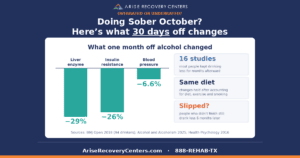
A month off alcohol does measurable things for your body. But the most useful thing Sober October gives you is information about your drinking. Here is how to read it.

A month off alcohol does measurable things for your body. But the most useful thing Sober October gives you is information about your drinking. Here is how to read it.
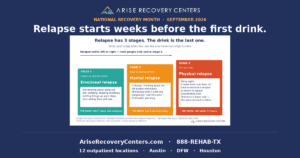
Relapse has three stages, and the drink is the last one. Here is what each stage looks like, how far out it starts, and the one move that stops it there.
Join us as we dive into the inspiring world of addiction recovery and witness the power of transformation in this interview on Great Day Houston. Arise Recovery Centers proudly presents our CEO, Danny Andino, and accomplished Houston Lead Clinician, Sonia Ruiz, as they share their profound insights and expertise with Deborah Duncan of KHOU Channel 11 in Houston. In this engaging conversation, Danny Andino reveals the driving force behind Arise Recovery Centers’ success and our unique approach to addiction treatment. Discover how our comprehensive programs empower individuals to overcome substance abuse and reclaim their lives, nurturing lasting recovery and personal
Life has been quite different for all of us these last few weeks, as social distancing and stay-at-home orders have become the new normal. But as we work and shelter at home, many of us are understandably feeling isolated and disconnected from our friends, family and support systems. This, in turn, has left more recovering addicts vulnerable to relapse. And health officials are seeing just that, as more people are reported as having urges and cravings to use drugs and alcohol. Triggers Caused by the Coronavirus We, as human beings, thrive on interaction and connection with others, and not being
According to the National Institute on Drug Abuse, approximately 40 to 60 percent of people relapse after getting treatment. This is a daunting statistic, but, really, should come as no surprise. After all, there are many reasons for why people revert back to their addiction after seeking help. For some, it may be due to their ambivalence to get sober – as in, they were never truly committed to put down the drug or drink in the first place. But for others, it may be because they didn’t adequately prepare for the difficult transition from rehab to home life. Moving from a protected, structured environment to one where all temptations are suddenly within reach can be a huge challenge for anybody. Hence, having appropriate aftercare lined up after completing a treatment program is essential.
When I got out of prison after serving time for a DWI Serious Bodily Injury conviction, day-to- day life was overwhelming, to say the least. For four years, I’d never had to make a decision for myself, and I found I’d forgotten how to cope with life’s unpredictability due to being away from society for so long. But, even though I was already struggling to adjust, things managed to get worse: my long-time boyfriend broke up with me, the kitten I’d just adopted from a local shelter died from a rare virus and I couldn’t get hired anywhere due to my “felon” label. Life as a free woman was nothing like I expected it to be, and all I wanted to do was give up and check myself back into the gated community.
You did it – you took that first step by becoming sober. But now that drugs and alcohol are out of the picture, you’re probably wondering if it’s possible to ever have fun again without using. This is a common concern for those in early sobriety, but one that is entirely possible to overcome.