
By Danny Andino, CEO, Arise Recovery Centers · Clinically reviewed by Nicholas Overbeck, LPC-S, LCDC · November 2026 · Overrated vs. Underrated
If you are new to recovery, you have probably thought about skipping Thanksgiving. No one refilling your glass. No questions. No old family fight.
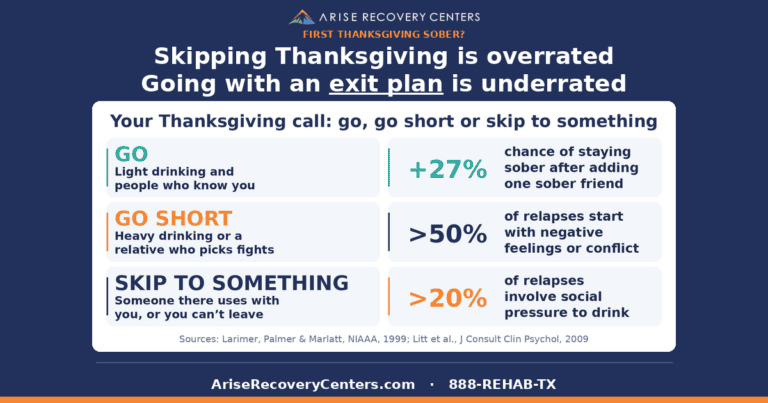
It feels like the safe choice. Often it isn’t. Skipping is overrated as a rule. What is underrated is going with an exit plan, or skipping to something instead of nothing.
The short version
- In a classic analysis of relapse, more than half of relapses started with negative feelings, like boredom or a low mood, or with conflict with other people.
- Social pressure, including just being around people who are drinking, played a part in more than 20%.
- Skipping dodges the pressure but not the mood. A holiday alone at home can bring on the No. 1 trigger with nobody around.
- Walking into a risky situation didn’t decide who relapsed. How people handled it did. That is why a plan beats a blanket rule.
- In a UConn study, adding just one sober person to someone’s circle raised their chance of staying sober over the next year by 27%.
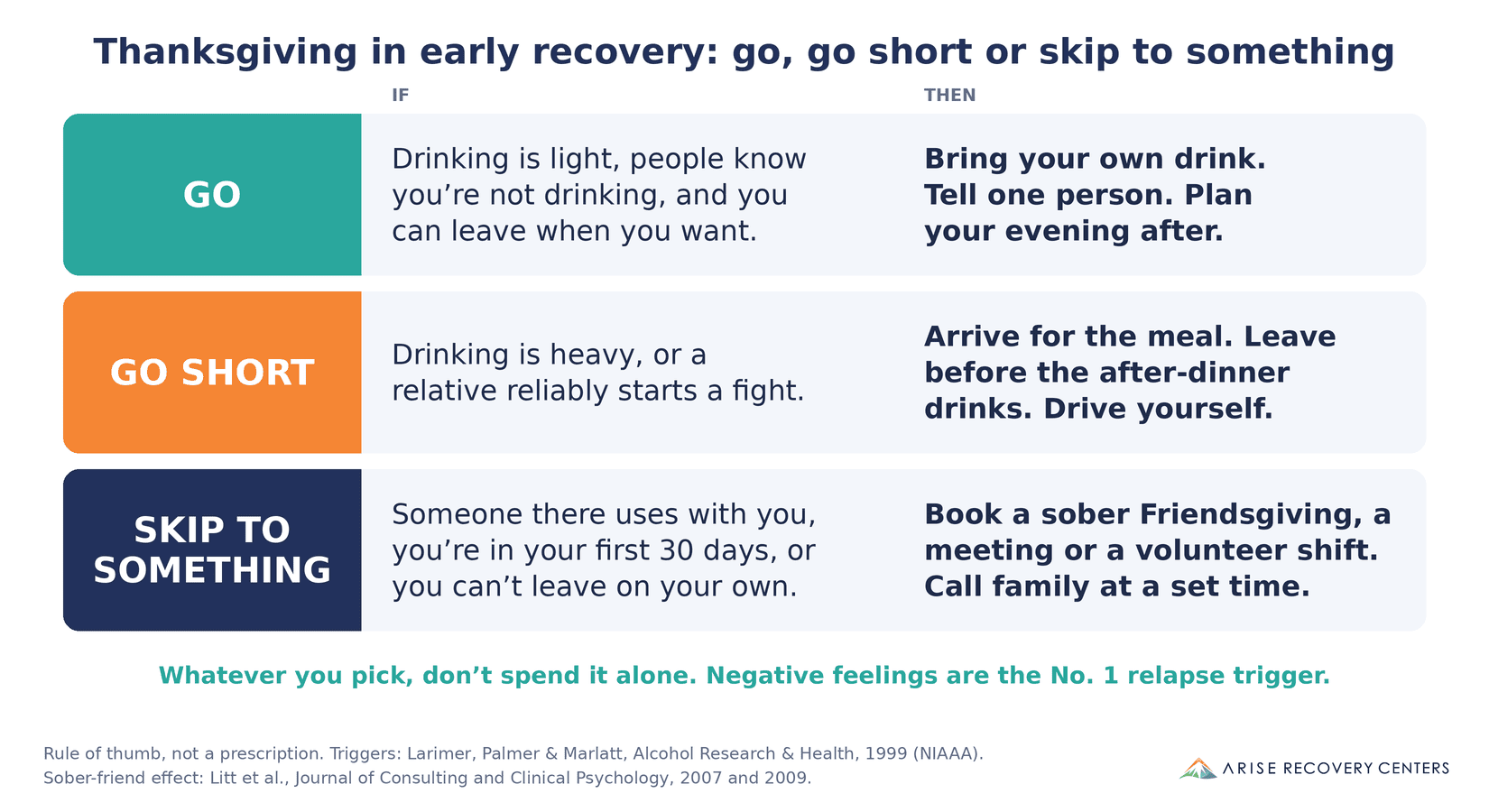
- Skip if someone there uses with you, you are in your first 30 days, or you can’t leave on your own. Then skip to something sober.
Why skipping feels safe, and why it often isn’t
Psychologist G. Alan Marlatt built the relapse prevention model that much of addiction treatment still draws on. In his analysis of people treated for alcohol problems, more than half of relapses began with negative emotions, such as anger, anxiety, depression, frustration or boredom, or with conflict with other people.
Social pressure played a part in more than 20%. That includes someone offering you a drink, and it includes simply being in a room where everyone else is drinking.
Thanksgiving can serve up all of it: a relative who keeps pouring, an old argument, a long afternoon with nothing to do but eat and drink. The holidays already run hot. In an American Psychiatric Association poll last November, 41% of adults said they expected more holiday stress than the year before.
Here is the inside read. Skipping dodges the pressure, but not the mood. A quiet apartment on a holiday, with everyone else’s photos on your phone, is boredom and a low mood with nobody around to notice.
Researchers also found that simply being in a high-risk situation didn’t predict who relapsed. How people coped with it did. That is the whole case for a plan over a rule.
When skipping is the right call
Sometimes skipping is exactly right. Skip if:
- Someone at the table uses with you, sells to you or will hand you something.
- You are in your first 30 days or just finished detox. Your plan is still new, and the day is long.
- The house has a history of threats, abuse or someone who will not take no for an answer.
- You can’t leave on your own: no car, no ride, or a flight you can’t change.
Then skip to something, not nothing, and put it on the calendar now. A sober Friendsgiving with people from treatment or your meetings. A volunteer shift serving a holiday meal. A video call with family at a set time, so they still feel you there.
Or a meeting marathon. Many AA groups hold Thanksgiving “alcathons,” meetings back to back for most of the day, often with food. Some online alcathons run for 15 hours or more.
If you go: the exit plan
- Drive yourself. Your own car, or a ride app open and a phone that is charged. Park where nobody can block you in.
- Keep your own drink in your hand. A full glass means fewer offers. Non-alcoholic beer and wine help some people and trigger others, so know which one you are.
- Arrive for the meal. Leave before the after-dinner drinks. Two to three hours is plenty. Staying until the last guest leaves to prove you can is its own trigger.
- Tell one person. A relative or friend who knows you are not drinking can run interference and walk out with you.
- Have a one-line answer. “I’m good, thanks.” “Not today.” You don’t owe anyone the story.
- Book the bookends. A meeting or call before you go, and one after. The drive home and the night after are when the day lands.
- Check HALT at the door. Hungry, angry, lonely, tired. Eat something, and fix what you can before you walk in.
One more thing: Thanksgiving is a five-day stretch, not one. It starts with Blackout Wednesday, the big bar night before the holiday, and runs through Sunday. Plan each night, not just Thursday.
One sober friend changes the math.
In a UConn study of people treated for alcohol problems, adding just one sober person to their social circle raised their chance of staying sober over the next year by 27%. Invite one to dinner, or go to theirs.
Overrated vs. underrated
Overrated
- Skipping as a blanket rule. It trades the pressure to drink for the No. 1 trigger: a low mood with nobody around.
- White-knuckling the whole day. Testing yourself is a relapse trigger in its own right.
- Explaining your sobriety to everyone. One line is enough.
Underrated
- Your own car and your own drink. Two small things that make leaving and saying no easy.
- Skipping to something. A Friendsgiving, a meeting, a volunteer shift.
- The Friday call. Check in the day after, whether Thursday went well or not.
If Thursday goes sideways
A drink at Thanksgiving is a slip, not a verdict. What matters is the next 24 hours. Tell your sponsor, counselor or a sober friend on Friday, not next month.
Relapse usually builds in stages, and a slip is a signal to tighten your plan, not to give up on it. If you don’t have one written down, here is how to build a relapse prevention plan.
Getting help in Texas
Most people who need treatment never need a hospital stay. Outpatient care gives you a counselor and a group to build this kind of plan with, and to check in with the week after.
Arise Recovery Centers provides outpatient drug and alcohol treatment at 12 locations in DFW, Houston and Austin, plus Virtual IOP anywhere in Texas: a day program, intensive outpatient and supportive outpatient. This guide to levels of care explains the options.
If you have been telling yourself you will start after the holidays, the holidays run until New Year’s. You can schedule a free consultation or verify your insurance online in about two minutes. Both are confidential and do not commit you to anything.
Safety note: If you stopped heavy drinking in the last few days, withdrawal can be dangerous, so talk to a doctor. If a slip involves opioids or pills, your tolerance is likely lower than it was, which raises overdose risk. Don’t use alone, and keep naloxone nearby.
Frequently asked questions
Should I skip Thanksgiving in early recovery?
Not automatically. Skipping avoids pressure to drink, but a day alone and bored brings its own risk: negative feelings are the most common relapse trigger. Skip if someone there uses with you, you are in your first 30 days or you can’t leave on your own, and plan something sober in its place.
How do I stay sober at Thanksgiving dinner?
Drive yourself, keep your own drink in your hand, tell one person you are not drinking and plan to leave before the after-dinner drinks. Book a meeting or a call with a sober friend before and after.
What do I say if someone offers me a drink at Thanksgiving?
Keep it short: “I’m good, thanks” or “Not today.” You don’t owe anyone an explanation. Holding your own drink cuts down on offers.
Is it OK to spend Thanksgiving alone in recovery?
It can be, if you plan the day. The risk is empty time alone. Fill it with a meeting, a sober friend, a volunteer shift or a set time to call family.
What is an alcathon?
A holiday meeting marathon. Many AA groups hold meetings back to back on Thanksgiving, often with food, and some online alcathons run for 15 hours or more. Your local AA intergroup or AA’s Meeting Guide app can point you to one.
Is non-alcoholic beer or wine OK at Thanksgiving?
For some people it helps them blend in. For others, the taste and the ritual bring on cravings. If you are not sure which you are, pick a drink that doesn’t look or taste like alcohol.
What if I drink at Thanksgiving?
Treat it as a slip, not the end. Tell your sponsor, counselor or a sober friend within a day and tighten your plan for the rest of the weekend. If the slip involved opioids or pills, your tolerance is likely lower, so don’t use alone and keep naloxone nearby.
Can I start outpatient treatment before the new year?
Yes. You don’t have to wait for January. Arise Recovery Centers offers a day program, intensive outpatient and supportive outpatient at 12 Texas locations, plus Virtual IOP. A free consultation is confidential and does not commit you to anything.
This article is education, not medical advice.
Sources: Larimer ME, Palmer RS, Marlatt GA, “Relapse Prevention: An Overview of Marlatt’s Cognitive-Behavioral Model,” Alcohol Research & Health 23, no. 2 (1999): 151–160 (National Institute on Alcohol Abuse and Alcoholism). Litt MD, Kadden RM, Kabela-Cormier E, Petry NM, “Changing Network Support for Drinking: Initial Findings From the Network Support Project,” Journal of Consulting and Clinical Psychology 75, no. 4 (2007): 542–555, and “Network Support Project 2-Year Follow-up,” Journal of Consulting and Clinical Psychology 77, no. 2 (2009): 229–242. American Psychiatric Association, “Americans Are More Anxious Than Last Year About the Upcoming Holidays,” Healthy Minds Poll, November 18, 2025 (Morning Consult, 2,203 U.S. adults). Online Intergroup of Alcoholics Anonymous, Thanksgiving alcathon listings, 2025.